 Tours
ToursThe Complete Merzouga Desert Guide: Erg Chebbi Dunes & Sahara Adventures
The complete guide to Merzouga and the Erg Chebbi dunes: how to get there, the best time to visit, where to stay, top desert activities and Sahara tours from every city.
Home › Travel Guide › Complete Merzouga Desert Guide
Merzouga is the small Saharan village that sits at the foot of Erg Chebbi, the tallest and most famous sea of dunes in Morocco. This complete guide brings together everything we have learned hosting travellers here since 2004 — where Merzouga is, when to come, how to reach it, where to sleep and what to actually do once the tarmac ends and the sand begins.
What is Merzouga?
Merzouga is a village in south-east Morocco, in the Drâa-Tafilalet region near the Algerian border. It exists because of the dunes: Erg Chebbi rises abruptly out of a flat, stony plain, reaching around 150 metres at its highest crest and stretching roughly 28 km north to south. Unlike the smaller dunes near Zagora, Erg Chebbi is the classic postcard Sahara — soft orange sand that turns pink at dawn and deep amber at sunset. The village itself is tiny; most of what draws people here happens on and around the sand: camel treks, desert camps, 4x4 trails out to nomad families and the Gnawa music village of Khamlia.
Where is Merzouga? (location & geography)
Merzouga sits at roughly 31.1°N, 4.0°W, about 35 km south of the town of Rissani and 50 km from Erfoud. The nearest small airport is Errachidia (ERH), about two hours north; most travellers, though, arrive overland from Marrakech or Fes as part of a desert tour. The landscape around the village is hamada — a wind-scoured plain of black basalt and dry lakebeds — with the great dune field of Erg Chebbi forming the eastern horizon. For a deeper look at the sand sea itself, see our Erg Chebbi dunes guide.
Best time to visit Merzouga
The two most comfortable seasons are spring (March–May) and autumn (September–November), with warm days and cool, clear nights — ideal for camel trekking and sleeping in a desert camp. Winter days (December–February) are pleasant and sunny but nights in the dunes can drop close to freezing, so a warm layer is essential. July and August are hot at midday, which is why we run camel treks at sunrise and sunset rather than the middle of the day. We break the year down month by month in our best time to visit Merzouga guide.
How to get to Merzouga
Merzouga is a genuine distance from Morocco's big cities, so plan for real driving time:
- From Marrakech — about 9 hours direct over the Tizi n'Tichka pass, which is why most people spread it over a 3-day or 4-day tour with stops at Aït Ben Haddou and the gorges.
- From Fes — roughly 7–8 hours through the Middle Atlas and the Ziz Valley, ideal as a 3-day Fes tour.
- From Casablanca — usually combined with Rabat, Meknes and Fes on a longer Casablanca desert tour.
Full distances, driving times and transport options are in our how to get to Merzouga guide.
Where to stay in Merzouga
You have two very different options, and many travellers do both. A hotel room gives you a pool, a real bathroom and air conditioning at the edge of the dunes — see our double, triple and quadruple rooms. A night in a luxury desert camp puts you out among the dunes in an en-suite tent with a Berber dinner under the stars. We compare the two in detail in our where to stay in Merzouga guide.
Top desert activities in Merzouga
The classic experience is an overnight camel trek into the dunes, but there is far more: quad biking across the sand, a 4x4 desert safari out to nomad camps and fossil fields, sandboarding down the big crests, and simply watching the sunrise from the top of a dune. See the full list on our best desert activities guide or the things to do in Merzouga page.
Morocco desert tours from Merzouga
Merzouga is the turning point of almost every Morocco desert tour. Whether you start in Marrakech, Fes or Casablanca, the dunes at Erg Chebbi are the goal. Longer loops such as our 7-day and 10-day itineraries string Merzouga together with the imperial cities, the Todra and Dades gorges and the Atlas. Our Morocco desert tours guide explains every route.
What to pack for the desert
Bring light layers for the day and a genuinely warm jacket for the night, a scarf against sun and blowing sand, closed shoes, sunglasses, a hat, high-SPF sun cream, a refillable water bottle, a head-torch and a power bank. For the camp night, a small overnight bag is easier than a full case. Our full Morocco desert packing list breaks it down by season.
Frequently asked questions
Is Merzouga worth visiting?
Yes — Merzouga sits at the foot of Erg Chebbi, Morocco's tallest and most scenic dunes, and offers the country's most accessible authentic Sahara experience: camel treks, desert camps, sunrise over the sand and genuine Berber hospitality.
How many days do you need in Merzouga?
One overnight (arrive for a sunset camel trek, sleep in a desert camp, watch sunrise) is the classic minimum. Two nights lets you add a 4x4 trip, quad biking and a slower pace.
Is Merzouga better than Zagora for the desert?
For most travellers, yes. Merzouga's Erg Chebbi dunes are far taller and more dramatic than the small dunes near Zagora, and they are reached on a paved road rather than a long rough track.
What is the closest airport to Merzouga?
Errachidia (ERH) is the nearest, about two hours away. Many travellers instead arrive overland from Marrakech or Fes as part of a multi-day desert tour.
Can you visit Merzouga in summer?
Yes, but it is hot at midday in July and August, so activities are scheduled for sunrise and sunset. Spring and autumn are the most comfortable seasons.
How much does a Merzouga desert trip cost?
An overnight camel trek and luxury camp starts from around €100 per person; multi-day tours from Marrakech or Fes start from around €150 per person, depending on group size.
Is Merzouga safe?
Yes. Merzouga is a well-established tourist village and the desert activities are run with proper guides and safety equipment. Book with a local operator who owns their own camp and camels.
What is there to do in Merzouga besides camel riding?
Quad biking, 4x4 desert safaris, sandboarding, visiting the Gnawa music village of Khamlia, stargazing, and day trips to Rissani market and the Erfoud fossil workshops.
Related
Tours Camp
Camp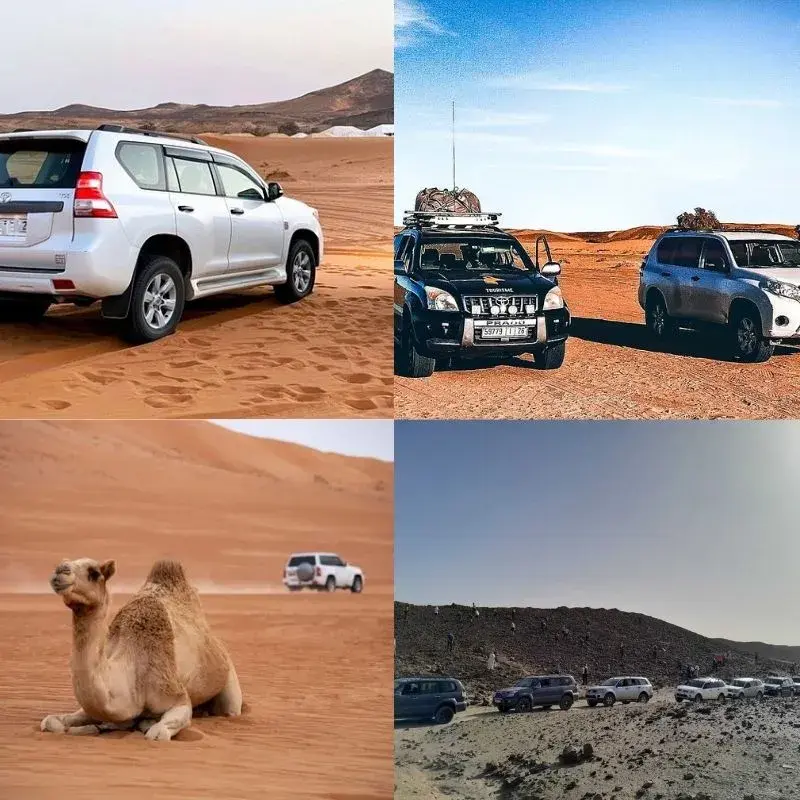 Activities
Have a question before you book?
Message the team directly — we usually reply within a couple of hours.
⚡ Spring & autumn dates fill fast — book ahead. · ✓ Free cancellation up to 48h before arrival.